
Kodachrome Exhibit

The second of our two exhibits focuses on the history of UConn through Kodachrome Film.  The innovation of Kodachrome in 1935 gave photographers the ability to capture the world around us in living color. 

Archery, 1951

Archery, 1951

It is likely that Jerauld Manter, faculty member and unofficial college photographer, took the color photographs in this exhibit in and around the University of Connecticut between 1939 and 1959. The prints on display were made from his original Kodachrome 35mm color slides and reflect the remarkable stability of this film over time.

Marchingband, 1942

Marching band, 1942

Manter’s photogarphs capture a period of significant growth in UConn’s history, beginning with its establishment as the multi-campus University of Connecticut in 1939. The next two decades saw the development of the Hartford, Stamford, Torrington and Waterbury regional campuses and the Schools of Law, Nursing and Social Work. The student body expanded by 300% after World War II, growing from 1,265 in 1939 to 9,761 in 1959.

History in images, continued….

As we promised, we will continue to highlight some of the great images on display in the Dodd Center from the Carl Brandt Collection.  

Aviation Club Members, circa 1947

Aviation Club Members, circa 1947

Carl Brandt joined the Aviation Club as photographer and took numerous photos for use in the school newspaper.    His pilots were usually World War ll vets who had flown bomber or fighter aircraft over Germany.

“Several of us would rent aircraft early on a Sunday mornings — and then fly for about half an hour to another airport that had a restaurant.  After a good breakfast, we would fly back to the original airport. ”

UCONN Flight -- about 1947-7x10 inch

Today is all about the past

Next weekend is UConn’s Alumni Weekend and we are celebrating with two very special exhibits that we will highlight all next week right here on our blog.

Athletic Event, circa 1948

Athletic Event, circa 1948

Photographs from university activities and events are a significant portion of our collections, as is true with many archives in higher education institutions.  They are incredibly important in documenting life on campus.  But all too often the images are a result of staff photographers employed to take official pictures.  We often see a different idea of what was important when students are taking the images.  

The exhibit “Something Important Happened Today: Student Photography on Campus” is a special exhibit for us, as it is from the photograph collection of Carl Brandt, Class of 1949. While on campus in the late 1940s — a period of remarkable change on the Storrs campus — Brandt took thousands of photographs and this exhibit presents a selection of Dr. Brandt’s images, complemented by his memories.

A View of South Campus, circa 1947

A View of South Campus, circa 1947

American Montessori Society Collection

Summer vacation for school children around the country will soon be upon us, a time when we look forward to the excitement that summer brings.  It is also a good time to reflect on the importance of our educational instutions, and today we will do that with a brief look at the Montessori school system.   

Copyright Cowles Magazines and Broadcasting, Inc. publishers of LOOK Magazine

Copyright Cowles Magazines and Broadcasting, Inc. publishers of LOOK Magazine


Nearly 100 years ago Dr. Maria Montessori, an Italian physician, inspired the birth of this worldwide educational movement. Dr. Montessori, one of Italy’s first female physicians, became interested in education while caring for mentally challenged children in a psychiatric clinic in Rome. There she combined sensory-rich environments and hands-on experiential techniques in the hopes of reaching children previously labeled “deficient and insane.” The experiment was a resounding success and with it the start of what today is a network of nearly 1,200 schools across the country that have incorporated core elements of her model—multi-age classrooms and early childhood education.

The Dodd Center holds the records of the American Montessori Society, which was founded in 1960 and since that time has succeeded in reviving the Montessori method in the United States and gaining recognition for it as a valid educational system. The society has become the foremost resource in America for Montessori education and teacher training. Check out more information at http://doddcenter.uconn.edu/findaids/ams/MSS20060230.html

Lest we forget.

dailycampus_19450509

An excerpt from Connecticut Campus, May 9, 1945.

So in this moment of triumph in Europe, when human nature practically compells us to feel that the worst is over and apathy is now in order, let us stop and consider. If ever America and the world needed moral, physical, and financial support – it is now.  Now is the time to dig in the hardest for there is a long torturous road ahead.

It is so easy to delude ourselves into feeling anything we could do would make no perceptible difference, but if anything we can do even helps shorten the war by one second and save one boy’s life – it should not have been in vain.

James Marshall Fellowship Grant

On Monday, May 4, 2009, at 2:30pm Ms. Thea Guidone will present the results of her research in the Northeast Children’s Literature Collection housed at the Thomas J. Dodd Research Center.  A recipient of the James Marshall Fellowship, Ms. Guidone is a children’s writer who lives in Hamden. At the University of Connecticut, she studied Children’s Literature with Francelia Butler, and Creative Writing with Matthew Proser, Elaine Scarry and Feenie Ziner. She earned her master’s degree at Yale University.  An active member of the Society for Children’s Book Writers and Illustrators, Ms. Guidone won Connecticut’s 2006 Tassy Walden Award for New Voices in Children’s Literature and is the author of Drum City (Tricycle Press, May 2010). She is at work on a middle grade novel set in New Haven in 1925.

Ms. Guidone will discuss subtext in schoolbooks and novels for girls, circa 1920’s, that informed and reinforced attitudes about wealth, privilege and class.  The presentation will take place in the Dodd Research Center’s conference room 162 and is free and open to the public.

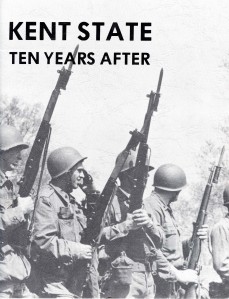
A Somber Anniversary

Published by Kent Popular Press and Kent Left Studios Forum in 1980.  Cover Photo from the Kent State University Archives.

Published by Kent Popular Press and Kent Left Studios Forum in 1980. Cover photo from the Kent State University Archives.

On this day in 1970, the Commons at Kent State University was the place 500+ students gathered to rally against the invasion of Cambodia the day before.  This started a train of events over the next few days that culminated in the death of 4 students and 9 others wounded on what is known as the May 4 massacre.  

What is has become a powerful and pervasive symbol of many things to different people, it is at very least a fascinating event for research.  The strength of the Alternative Press Collection at the Dodd Research Center pertains to the Vietnam era and related unrest with alternative tabloids from the 1960s and early 1970s include Georgia Straight, The Berkeley Barb, and East Village Other.  It’s a great resource to learn more about the anti-war struggle that sparked the events of May 1.  http://doddcenter.uconn.edu/dodda2z/subjectarea.cfm?Area=1

All about the Connecticut Historic Preservation Collection

West Cornwall Covered Bridge

CHPC documentation study done in 2002 of the West Cornwall Covered bridge over the Housatonic River


Have you ever been curious about the architectural and archaeological history of properties in Connecticut? Did you know that the Dodd Research Center is a virtual one-stop-shopping destination for information about thousands of historical properties and of hundreds of archaeological digs in the 169 towns in the state? It’s true! The Connecticut Historic Preservation Collection, a listing of which can be found at http://chpc.lib.uconn.edu, has information about architectural and archaeological studies done by professional archaeologists and historians, located at the Dodd Research Center. We receive them from the Connecticut Commission on Culture & Tourism’s Historic Preservation & Museum Division. The studies date back to the 1970s and are current up to the present. Unfortunately, none of the surveys are available online so you’ll have to come visit us at the Dodd Research Center to take a look at them. We look forward to helping you find the properties you’re searching for!

CHPC documentation study done in 1985 of the Israel Putnam School in Putnam, Connecticut

CHPC documentation study done in 1985 of the Israel Putnam School in Putnam, Connecticut

A car that costs 1,395 bananas?

As the first Commissioner of Connecticut’s Department of Consumer Protection, Attilio Frassinelli would have had many stories to tell. In this case, it would be about a housewife from Connecticut who saw an ad to buy a car for 1,395 bananas and decided to bring the bananas to the dealership. When they didn’t honor the ad, she went to Commissioner Frassinelli for help.
Banana Trade Ripens

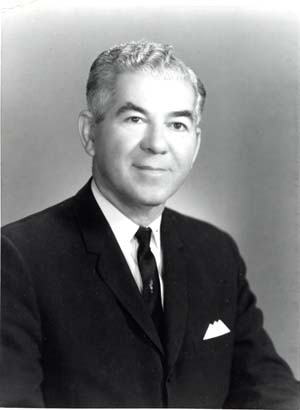
In a dedication cermony this past Sunday, the Frassinelli family donated the papers of the late Attilio “Pop” Frassinelli to the Dodd Research Center. Frassinelli’s biography is full of wonderful and interesting surprises.

Atillio "Pop" Frassinelli
A life-long resident of Stafford Spring, he was a mill worker, business owner, President of the Rotary Club, Justice of the Peace, insurance agent, the Connecticut Boxing Guild’s “Boxing Man of the Year”, dancer and First Selectman to name a few. In 1955 he was appointed as the first Commissioner of Connecticut’s Department of Consumer Protection and later, in 1966, elected Lieutenant Governor of Connecticut.

In the words of his granddaughter Dianne Bilyak, family and friends gathered in the Dodd Center “not just to honor, remember, and celebrate Pop, but also to gather as a family and be reminded of our collective history.” We are pleased that the family has chosen the Dodd Research Center to care for and house this important collection to the history of Connecticut.

Mama don’t take my Kodachrome away!

Summer Session Picnic, 1942

Kodachrome
They give us those nice bright colors
They give us the greens of summers
Makes you think all the world’s a sunny day, Oh yeah
I got a Nikon camera
I love to take a photograph
So mama don’t take my Kodachrome away

Although recorded 37 years after the release of Kodachrome 35mm silde film, the song “Kodachrome,” written by Paul Simon captures the feeling many people have about the remarkably stable film stock. “Makes you think all the world’s a sunny day….” Kodachrome slides from the late 30s, 40s and 50s have retained their ture color with no fading or color shifting. If you want to see what University life really looked like in that period, make sure you visit the exhibition The University of Connecticut in Kodachrome, 1939-1959 scheduled to open May 26, 2009 in the HBL Gallery on the Plaza. These photographs make those decades seem like yesterday. It’s cliche to say history will come alive, but it will.

Dodd Center receives the Outstanding Ally Office/Department Award

The Dodd Research Center received the “Outstanding Ally Office/Department Award” by the University of Connecticut’s Rainbow Center last night at the Lavendar Graduation Ceremony.  The award recognized our public outreach efforts to educate the community on LGBTQ issues.  One of those recent efforts noted included the exhibit “From the Margins to the Mainstream:  Lesbian, Gay, Bisexual, Transgender and Queer History, 1968-2008,” a historical and contemporary look at materials published by the LGBTQ community.  Included in the program was a screening of the film “After Stonewall”.  The award also recognized the continued effort by the curators to actively collect documents of value to the research of LGBTQ issues.  

For more information on the materials in our collection, here is a quick link to the Alternative Press Collections main page http://doddcenter.uconn.edu/collections/apc/brochure.htm