
Race Restrictive Covenants in Hartford area, 1940s: A Map with Linked Documents

This is the fourth in a series of posts on web-based maps developed by the University of Connecticut Libraries Map and Geographic Information Center (MAGIC) for the On The Line project.

Today’s posting on interactive maps showcases the Race Restrictive Covenants in Property Deeds, Hartford area, 1940s, which exemplifies the use of Geospatial technologies in the humanities. Geospatial technology allows us to show historic data in new and interesting ways and enables the user to see the data from a new perspective. Working with Professor Jack Dougherty at Trinity College, MAGIC developed this digital map as part of the On The Line project, a public history of schooling, housing, and civil rights in the Hartford metropolitan region.

Click image to explore our Race Restrictive Covenants Map

Restrictive covenants are barriers — typically against African-Americans, Jews, or Catholics — that were written into property deeds by individual home owners or real estate developers, to legally block them from owning or occupying housing. In 1921, the U.S. Supreme Court affirmed the right of private property owners to insert these restrictions, but when challenged by civil rights organizations such as the NAACP, it eventually ruled in the 1948 Shelley v Kraemer case that these restrictions were no longer enforceable by governmental authority. Yet restrictive language still exist in the legal paper trail of property records. Based on their search of property records in West Hartford, Professor Dougherty and a Trinity student researcher, Katie Campbell, so far have found 5 examples of racial restrictive covenants in suburban housing developments from the early 1940s. Click the map above to see the location of each covenant, with a link to scanned source document.

For example, the developer of High Ledge Homes, located near South Main Street in West Hartford, inserted this restriction when filing the property deed in June 1940:

“No persons of any race except the white race shall use or occupy any building on any lot except that this covenant shall not prevent occupancy by domestic servants of a different race employed by an owner or tenant.”


While students generally learn about the history of segregation in Southern and border states, this map reveals a hidden chapter in our history of the North. Racially restrictive covenants have been extensively documented in other northern cities, such as Chicago, Detroit, and Seattle. In their digital history website, the Seattle Civil Rights and Labor History Project, students and faculty from the University of Washington built community awareness that helped to pass a 2006 state law making it easier for homeowners associations to rid themselves of these historical racial covenants.

Within the Hartford region, can you help us find other examples of restrictive covenants by race, religion, or nationality? Do you recall seeing or hearing about similar barriers in the property deed of a family member or neighbor? If so, please post a comment on the On The Line website or contact MAGIC via email.

Technical Detail:

The cartographic layer for the Race Restrictive Covenants in Hartford area, 1940s: A Map with Linked Documents map was created using ESRI’s ArcMap software. Professor Dougherty and Katie Campbell from Trinity College located housing development deeds in West Hartford, CT containing restrictive language.

Using the deeds, we digitized the location of housing developments that contained restrictive covenants, and then exported the shapefile as a KMZ file using ArcGIS ArcToolbox conversion tool. We then edited the individual pop-up balloons using Google Earth and added HTML code to link PDF documents of the property deeds and to improve the overall display of the data, and then this layer was saved as a KMZ file. This is similar to the customization of the Redlining in Hartford KMZ discussed in a previous blog posting. We also integrated a point file for each housing development with restrictive covenants in West Hartford, CT to enhance the geographic visibility of the five developments.

The linked documents map utilizes the Google Maps JavaScript API V3 and custom javascript code by Ben Spaulding and Thomas Bachant. The interactive map interface overlays our content on a Google Maps interface.

Coming next in this series — Home Value Index in the Hartford Region, 1910-2007: An Animated Time Slider Map

UN to Establish Committee on Global Geospatial Information

Last week, the United Nations Economic and Social Council (ECOSOC) voted to establish a committee of experts to manage international cooperation regarding geospatial infrastructure. This press release highlights the diverse applications of GIS for the UN including analyzing climate change, natural disaster response and preparedness as well as managing population displacement, food and economic crises and pandemics. For more, visit the United Nations Initiative on Global Geospatial Information Management.

A Spatial Revolution in the Humanities

Geospatial Technology, particularly in the past decade, has become more intuitive and user-friendly. This, in turn, has catalyzed the growth of a community of users that span a wide range of disciplines. Here, at the University of Connecticut Libraries’ Map and Geographic Information Center (MAGIC), much of what we work on is related to producing or preserving historical spatial data. This includes digitizing and georeferencing historical maps, producing cartographic layers from historical census data and making historical aerial imagery available to the public. We hope that by doing this, we can not only be of service to the traditional users of GIS, but also to those who are breaking new ground and finding novel applications for spatial analysis.

A Viewshed Analysis showing General Robert E. Lee’s perspective on the second day of fighting at Gettysburg. This recent NYT article describes research done at Middlebury College by Geographer Anne Kelly Knowles

The disciplines comprising the humanities, including but not limited to Anthropology, History, and Literature, have recently shown an affinity toward employing spatial analysis techniques. This New York Times article has received much attention lately, as it highlights the use of GIS by scholars to improve their understanding of historical events (such as Gettysburg and The Dust Bowl). A project at the University of Virginia Library, entitled Spatial Humanities, works to encourage this integration of spatial technology in the humanities. In May 2010, the UVA Library hosted an event “The Scholars’ Lab/NEH Institute for Enabling Geospatial Scholarship”. Follow this link to view two minute, three slide Lightning Talks from this event for more examples of spatial humanities projects and works in progress.

Spatially-enabling the humanities is not limited to scholars, however, and Google products have become a great tool for integrating a spatial dynamic for K-12. Google Lit Trips, which is a project that compiles cartographic layers related to Literature, is a great example of this.

At the University of Connecticut, we hope to do our part in contributing to this digitally-enabled spatial revolution in the humanities. Over the past two years, MAGIC has worked closely with Professor Jack Dougherty from Trinity College to produce cartographic products for On The Line: How Schooling, Housing and Civil Rights Shaped Hartford and its Suburbs.

Redlining, or discriminatory lending practices by geographic area, was a driving factor that shaped the Hartford Region. MAGIC helped to produce cartographic layers for On The Line that visually portray these policies.
This web book, supported by a grant from the National Endowment for the Humanities, has been a collaboration between historians, geographers, librarians, technology specialists and students. My colleagues and I at MAGIC have had the opportunity to produce innovative digital maps for this project, some of which have been highlighted in our recent, and ongoing, blog series highlighting our partnership with Jack. In case you missed them, follow these links and stay tuned for more!

Interactive Map Shows States’ Renewable Energy Goals

Interested in finding out more about renewable energy policies in your state? Climate Central recently published this interactive map of Renewable Portfolio Standards by state. Renewable Portfolio Standards (RPS) are voluntary goals that many states’ have established to encourage the adoption of clean and renewable energy sources. For more information regarding RPS, visit this EPA website.

Population Services International (PSI) Employs GIS To Improve the Health of the Poor and Vulnerable in Developing Countries

PSI’s Interactive Map shows the organizations Areas of Interest

PSI is a global non-governmental organization (NGO) that works to reduce the amount of suffering by people in the developing world due to reproductive health and non-communicable diseases. One research approaches that PSI employs in order to ensure the most effective use of resources is Measuring Access and Performance (MAP). A cornerstone of this approach is to recognize the relationship between the population’s need and the delivery system coverage and quality. This inherently geographic approach uses GIS to determine whether or not supply for services is meeting the demand. PSI is able to do this because of an agreement with the World Health Organization that allows PSI to access data and software crucial to the spatial analysis. 

Geospatial Technology Is Enabling Better Power Management in California

According to this Reuters article, Geospatial Technology has enabled real-time management of electricity in California. What does this entail? For one thing, a control room equipped with “an 80 foot by 6.5 foot screen” to display the power grid in real-time. Software developed by Space-Time Insight, which uses Google Maps as a base map, allows employees at The California Independent System Operator Corporation to manage power supply in addition to determining what source of power will be cheapest for specific locations. One example this article cites is how California ISO was able to divert power flow away from areas affected by wildfires in San Diego in 2008.

Crisis Management with Mobile Applications

Check out this article that details a “Crisis Management App” that first responders in Marietta, Georgia use in emergencies. The application, developed with ESRI’s ArcView 10 and Adobe Flex, is designed to be used by non-GIS experts. Although it is designed for easy functionality, the capabilities of the application remain rich. Users (first responders) can add features, such as incidents and roadblocks in addition to accessing imagery and live video stream.

Also, be sure to check out this CNN article that details the growing use of Social Media in times of disaster. Russ Johnson, the director for public safety and homeland security for ESRI, is quoted throughout the article describing how these tools can help emergency resources be deployed more efficiently in time sensitive situations.

August 2011 – New American FactFinder Workshops at UConn Storrs

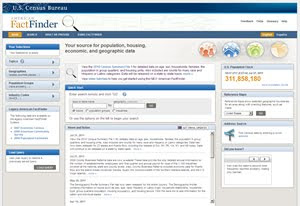
Are you interested in downloading and using 2010 U.S. Census for Connecticut and having trouble using the New American FactFinder? Are you interested in learning more about how to use the New American FactFinder to access data from the 2010 U.S. Census? The Connecticut State Data Center is offering workshops at the University of Connecticut Storrs Campus to provide users with an opportunity to learn more about the New American FactFinder in a hands-on workshop environment. Included below are the upcoming workshops dates/times and registration links:
Workshop Dates:
August 9, 2011 from 10:00am-11:30am
August 11, 2011 from 1:00pm-2:30pm
August 12, 2011 from 10:00-11:30am
These workshops are free and open to the public.
Workshop Location:
Each of these workshops are being held at the University of Connecticut Homer Babbidge Library on the Storrs Campus in Electronic Classroom 2 on Level 2 of the Homer Babbidge Library. Parking is available in South Parking Garage (located just behind the UConn Co-op) and parking costs must be paid in cash upon exiting the garage.
Space is limited so register early and feel free to share this announcement with anyone that may be interested in attending this workshop. Additional sessions of this workshop will be offered over the coming months, so be sure to check the Connecticut State Data Center’s website for the latest events (http://ctsdc.uconn.edu). 

2011 GIS in Public Transportation Conference Announced

The Urban Regional Information Systems Association (URISA) and the University of South Florida’s National Center for Transit Resarch at the Center for Urban Transportation Research (CUTR) have announced the details to the 2011 GIS in Public Transportation Conference, which is September 13-15, 2011 at the Hilton Bayfront in St. Petersburg, Florida. The conference is still accepting poster submissions.

For more information click here!